The Renaissance era
1400–1600
Voices weave together like golden threads — the age of grand cathedral choirs, madrigals, and the very first printed music.
The sound of the Renaissance
Renaissance music is above all the music of the human voice. Choirs sing without instruments in great stone churches, each voice line entering one after another and weaving around the others — a technique called polyphony, 'many voices'. There is no thumping beat; the music floats and overlaps like ripples on water. Alongside sacred masses and motets, people sang madrigals about love and springtime at home, and danced to lutes, viols and recorders. And thanks to the new printing press, ordinary people could buy music for the very first time.
What to listen for
- Voices entering one by one with the same melody, like a round
- Smooth, floating lines with no strong beat to tap your foot to
- Word-painting — the music rises on the word 'heaven' and falls on 'tears'
- Pure a cappella sound: nothing but human voices, perfectly balanced
The world at the time
Europe was being reborn — 'Renaissance' means rebirth. Gutenberg's printing press (c.1440) sent ideas racing across the continent faster than ever before, and daring sailors like Columbus crossed oceans into the unknown. In Italy, Leonardo da Vinci painted the Mona Lisa and filled notebooks with flying machines while Michelangelo carved David and painted the Sistine ceiling. Then in 1517 Martin Luther's Reformation split the church — and changed what music was sung in it. By the era's close, Elizabeth I ruled England and a young Shakespeare was filling London's theatres.
There's no orchestra to count yet in the Renaissance — music is written for choir and small consorts of viols, lutes and recorders. That starts to change fast once the Baroque begins. See the full growth across all five eras on the orchestra history wall chart →
4 composers of the Renaissance — meet them
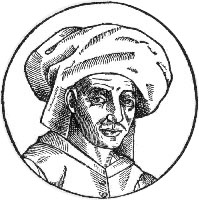 Josquin des Prez
1450–1521
Josquin des Prez
1450–1521
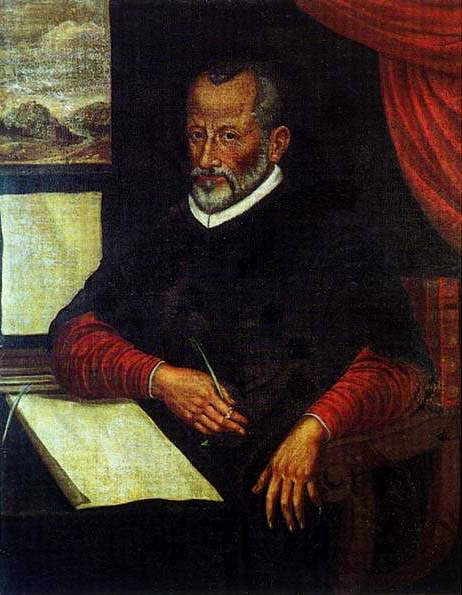 Giovanni Pierluigi da Palestrina
1525–1594
Giovanni Pierluigi da Palestrina
1525–1594
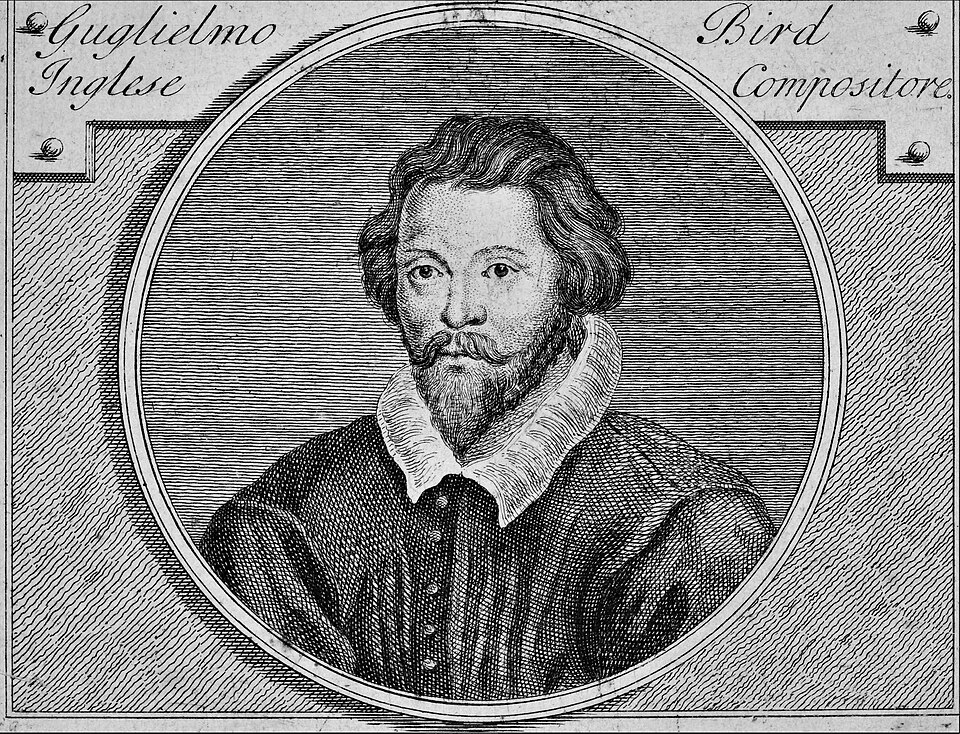 William Byrd
1543–1623
William Byrd
1543–1623
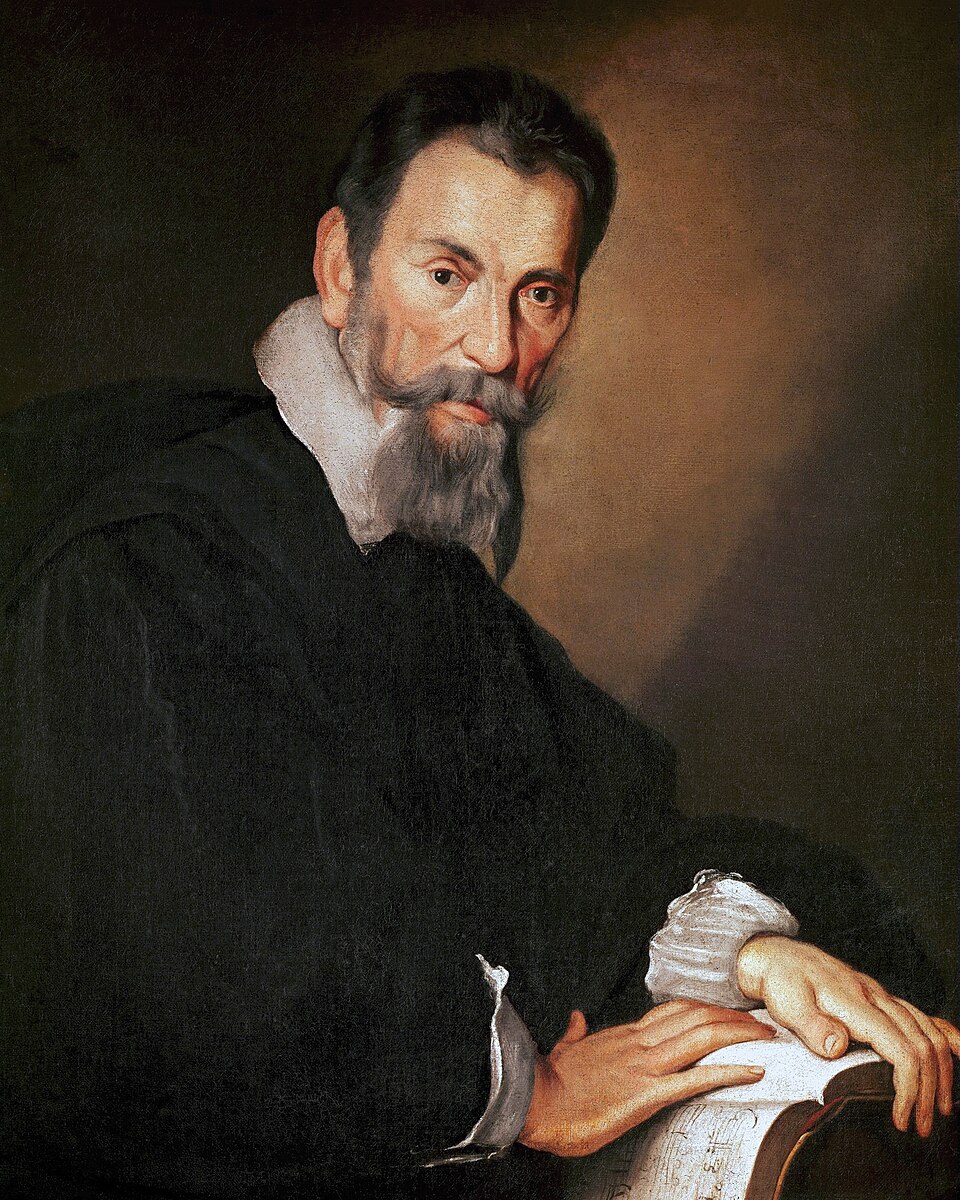 Claudio Monteverdi
1567–1643
Claudio Monteverdi
1567–1643
Notable people of the age
- Leonardo da Vinci (1452–1519) — Painting The Last Supper for the Sforza court in Milan while Josquin sang there.
- Christopher Columbus (1451–1506) — Sailing west into the unknown while Josquin sang in Rome.
- Johannes Gutenberg (c.1400–1468) — His printing press made Josquin the first widely published composer.
- Michelangelo (1475–1564) — Carving the Pietà in Rome in the years after Josquin sang there.
- Queen Elizabeth I (1533–1603) — England's music-loving queen — she played the virginals.
- William Shakespeare (1564–1616) — Beginning his playwriting career as Palestrina's career closed.
- Galileo Galilei (1564–1642) — Son of a composer — he grew up on the very music theory Palestrina perfected.
- Thomas Tallis (c.1505–1585) — His teacher and printing partner — the two Catholics served the Protestant court side by side.
- Caravaggio (1571–1610) — Painting with the same shocking light-and-shadow drama Monteverdi brought to music.
- Peter Paul Rubens (1577–1640) — The age's grandest painter, working as Monteverdi's operas swept Italy.