The Modern era
1900–2000
Rules are broken — new scales, wild rhythms and sounds nobody had ever imagined.
The sound of the Modern
Around 1900, composers began asking a thrilling question: what if the old rules were only suggestions? Debussy blurred harmony into shimmering washes of colour, like Impressionist paintings in sound, using new scales borrowed from dreams and distant lands. Stravinsky unleashed pounding, off-balance rhythms that caused an actual riot. Melody, harmony and rhythm were all reinvented — sometimes gently, sometimes explosively — and the phonograph and radio carried every experiment around the world. From now on, each composer would invent a sound entirely their own.
What to listen for
- Shimmering, blurred harmonies that glow rather than march
- Wild, lopsided rhythms — try tapping along and getting thrown off
- Strange and beautiful instrument colours: flutes in the deep, muted trumpets
- The delicious moment a 'wrong' note turns out to be exactly right
The world at the time
The twentieth century changed everything, fast. The Wright brothers flew in 1903; within one lifetime, humans walked on the Moon (1969) — and 87-year-old Stravinsky watched it on television. Einstein bent space and time, Marie Curie unlocked the atom, Picasso shattered painting into cubes, and the movies learned to talk. Two world wars redrew the map and scattered artists across the globe — Stravinsky himself lived in Russia, Switzerland, France and finally Hollywood. In a century of shocks and wonders, music broke its rules and remade them, again and again.
By the Modern era the orchestra had eased back slightly to around 90 players — still built on the same string core that anchored every era before it. See the full growth across all five eras on the orchestra history wall chart →
7 composers of the Modern — meet them
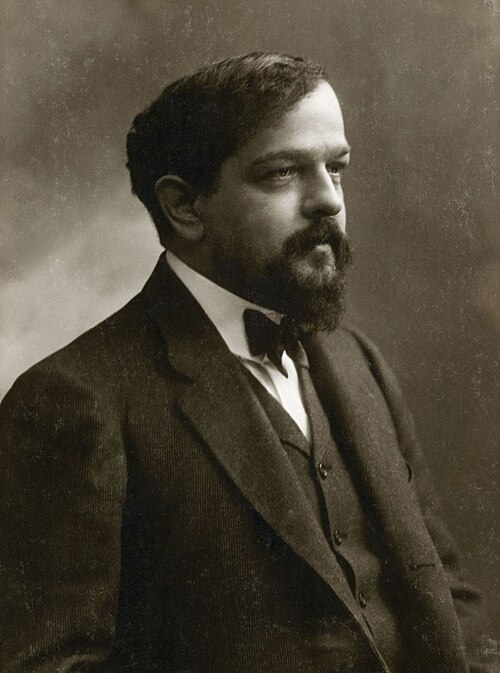 Claude Debussy
1862–1918
Claude Debussy
1862–1918
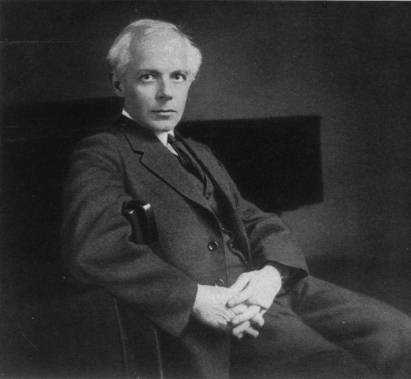 Béla Bartók
1881–1945
Béla Bartók
1881–1945
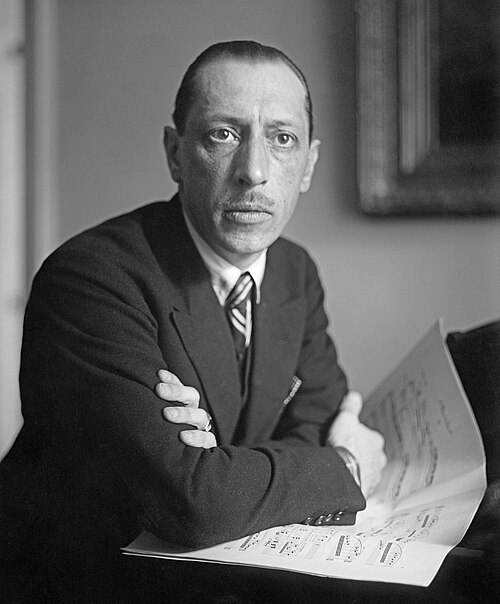 Igor Stravinsky
1882–1971
Igor Stravinsky
1882–1971
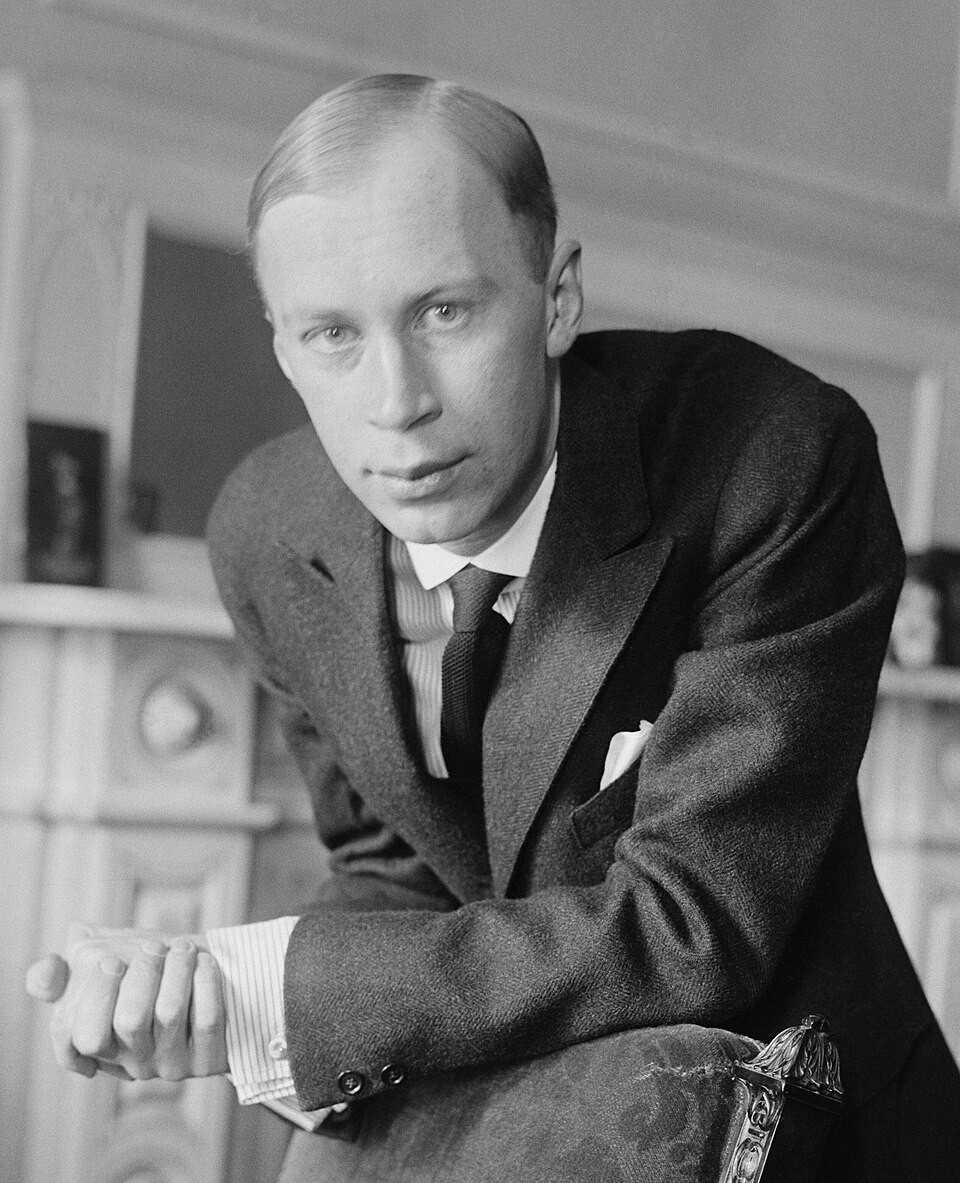 Sergei Prokofiev
1891–1953
Sergei Prokofiev
1891–1953
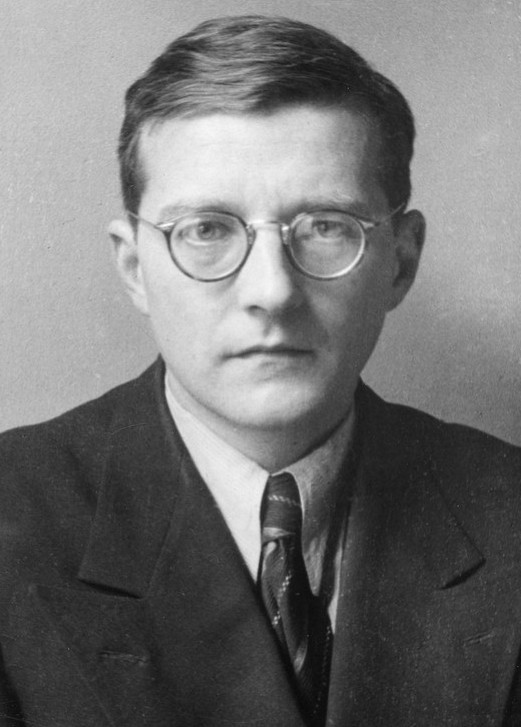 Dmitri Shostakovich
1906–1975
Dmitri Shostakovich
1906–1975
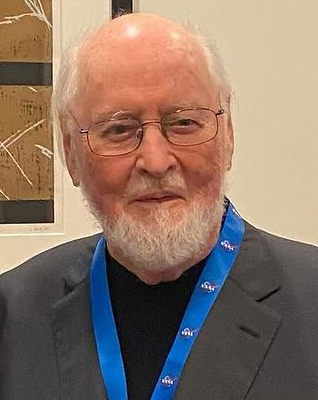 John Williams
1932–present
John Williams
1932–present
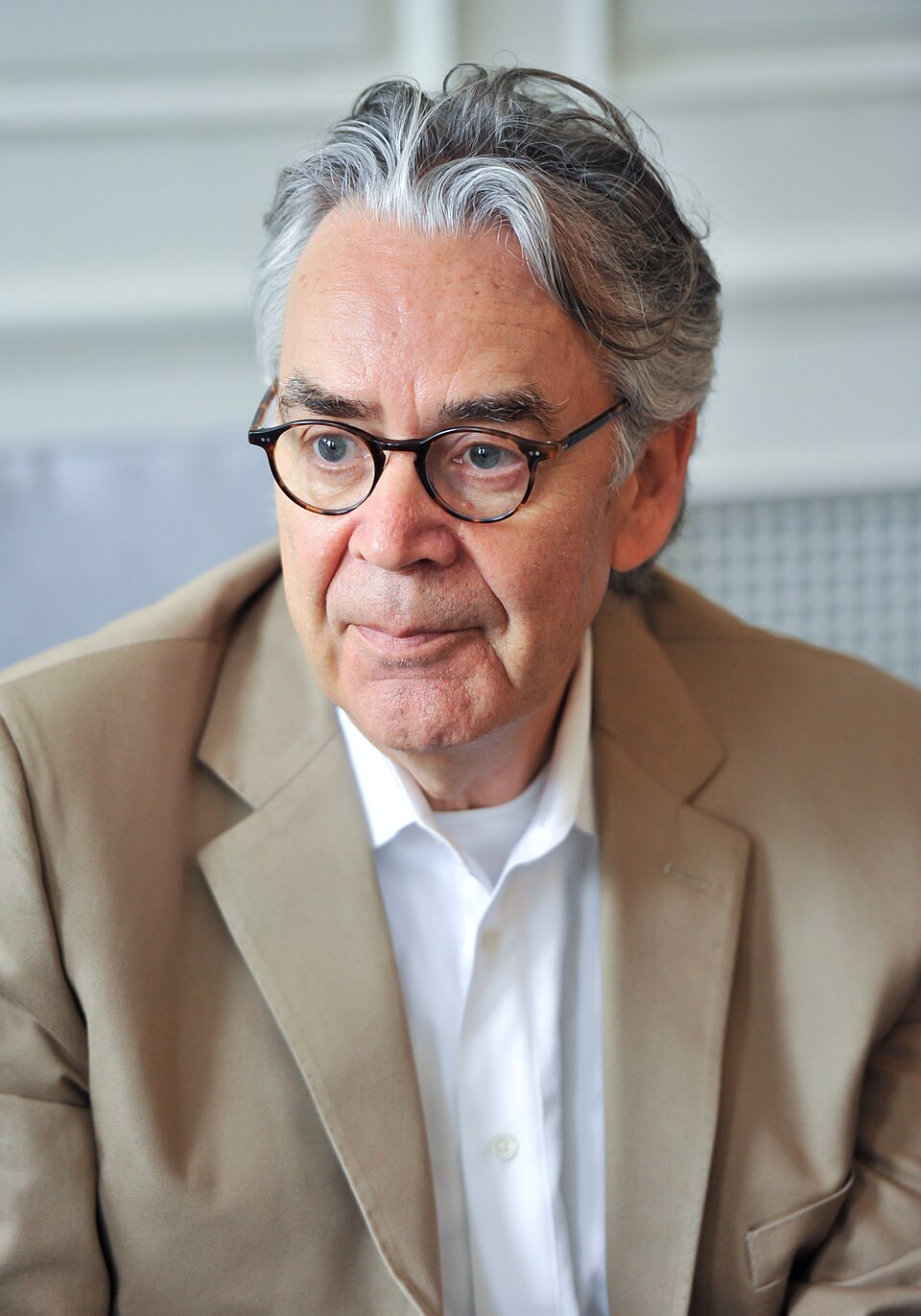 Howard Shore
1946–present
Howard Shore
1946–present
Notable people of the age
- Claude Monet (1840–1926) — Painting water lilies while Debussy composed reflections in water.
- Marie Curie (1867–1934) — Discovering radium in Paris, two Nobel Prizes, a few streets away.
- Auguste Rodin (1840–1917) — Sculptor of The Thinker in the same artistic Paris.
- Jules Verne (1828–1905) — Imagining submarines and moon voyages as Debussy imagined new sounds.
- Zoltán Kodály (1882–1967) — His close friend, who tramped the villages collecting folk songs alongside him.
- Pablo Picasso (1881–1973) — Born the very same year, and remaking painting as boldly as Bartók remade music.
- Albert Einstein (1879–1955) — Rewriting physics while Stravinsky rewrote rhythm.
- Coco Chanel (1883–1971) — Fashion revolutionary who supported Stravinsky's family in Paris.
- Walt Disney (1901–1966) — Used The Rite of Spring for the dinosaurs in Fantasia (Stravinsky had mixed feelings!).
- Sergei Rachmaninoff (1873–1943) — The other great Russian composer-pianist of the age, also in exile from the revolution.
- Benjamin Britten (1913–1976) — The English composer who became a close and trusted friend across the Iron Curtain.
- Yuri Gagarin (1934–1968) — The first human in space, a hero of the same Soviet age Shostakovich chronicled in sound.
- Steven Spielberg (b. 1946) — The director behind so many of Williams's scores — one of cinema's greatest partnerships.
- George Lucas (b. 1944) — Creator of Star Wars, who handed Williams his most famous assignment of all.
- Leonard Bernstein (1918–1990) — The towering American composer-conductor of the generation just before Williams.
- Peter Jackson (b. 1961) — The director of The Lord of the Rings, and Shore's great collaborator in building Middle-earth.
- Hans Zimmer (b. 1957) — The other towering figure of modern film scoring, working in a very different style.
- Enya (b. 1961) — The Irish singer whose ethereal voice joined Shore's music in the Rings films.