The Classical era
1750–1820
Elegance, balance and clear melodies — the age of the symphony, sonata and string quartet.
The sound of the Classical
After the Baroque's golden busyness, Classical composers wanted clarity: one beautiful melody at a time, supported by graceful accompaniment. Tunes come in neat, balanced phrases — a musical question answered by a musical reply. This is the era that invented the forms composers still study today: the symphony, the string quartet and the sonata, each a drama of contrasting themes. The gentle harpsichord gives way to the expressive new piano, and music moves out of palaces into public concert halls, written to delight everyone from empresses to shopkeepers.
What to listen for
- Clean, singable melodies in tidy question-and-answer phrases
- Sudden contrasts — a whisper, then a full-orchestra surprise
- The four-movement symphony: bold, songful, dancing, dashing
- An 'accompaniment engine' of gently rippling broken chords
The world at the time
The Age of Enlightenment believed reason could remake the world — and then revolution actually did. Thinkers like Voltaire and Benjamin Franklin championed science and liberty; America declared independence in 1776, and in 1789 the French Revolution toppled the old order entirely, ending with Napoleon crowning himself emperor. Balloons carried the first human beings into the sky, Captain Cook charted the Pacific, and James Watt's steam engine quietly ignited the Industrial Revolution. Music's centre of gravity shifted too — from serving princes to enchanting the public.
The Classical orchestra grew to around 38 players — a proper string section, winds now paired off, and the clarinet joining the family for the first time. See the full growth across all five eras on the orchestra history wall chart →
4 composers of the Classical — meet them
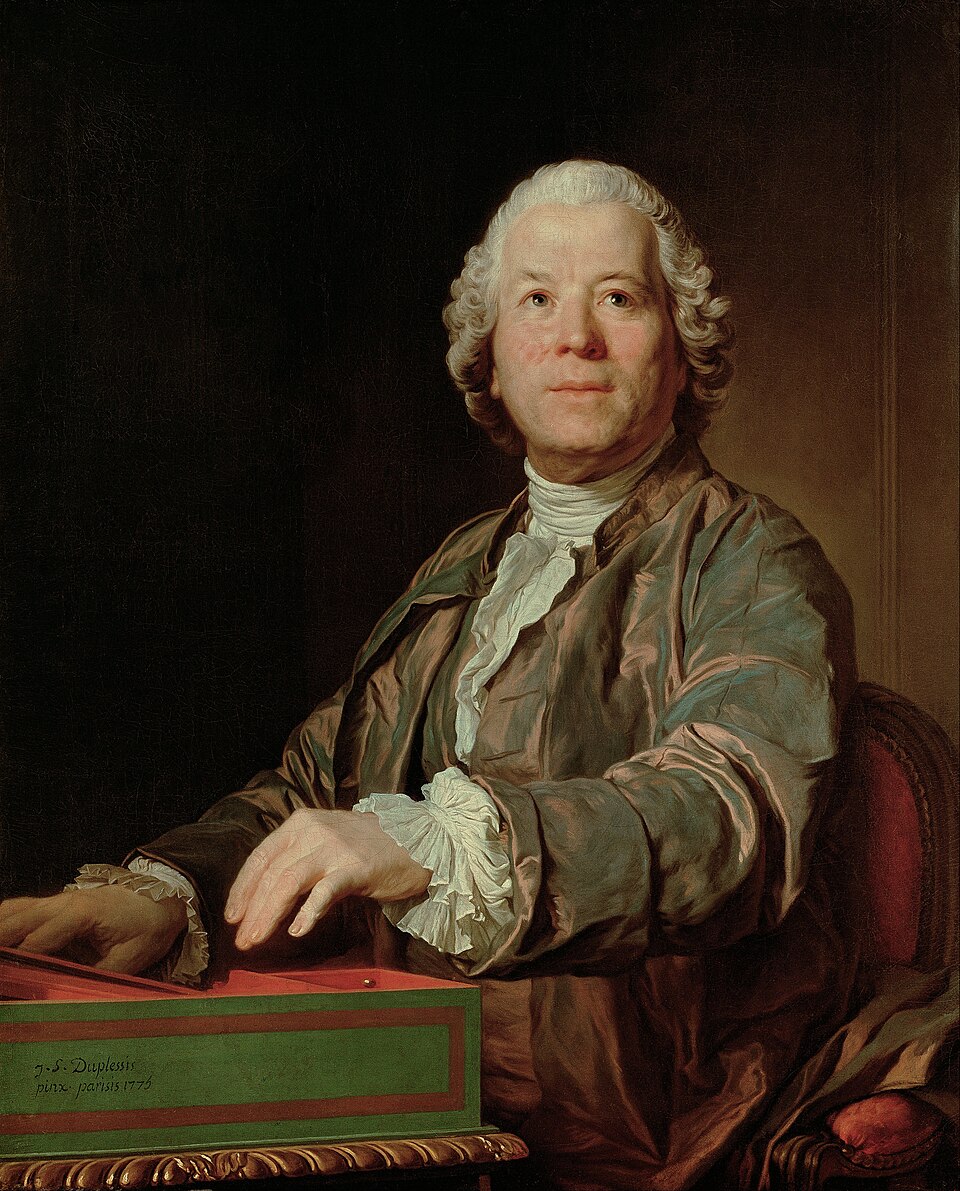 Christoph Willibald Gluck
1714–1787
Christoph Willibald Gluck
1714–1787
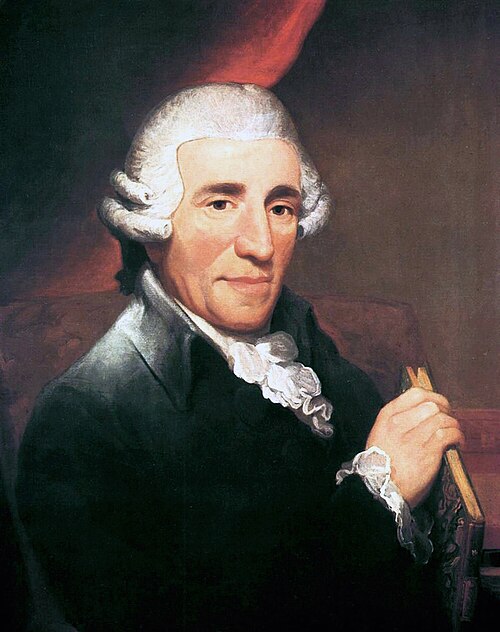 Joseph Haydn
1732–1809
Joseph Haydn
1732–1809
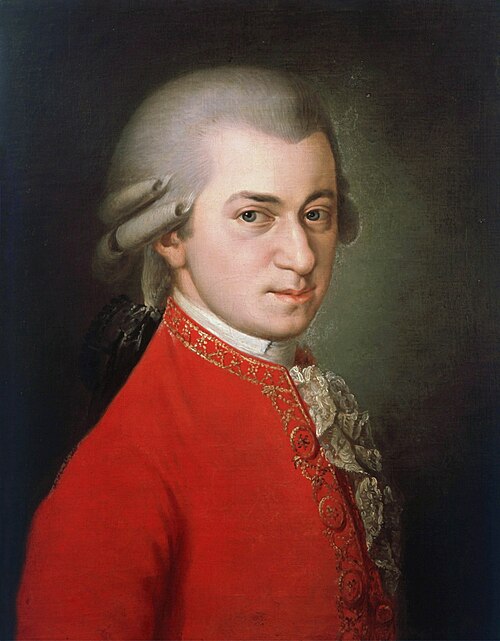 Wolfgang Amadeus Mozart
1756–1791
Wolfgang Amadeus Mozart
1756–1791
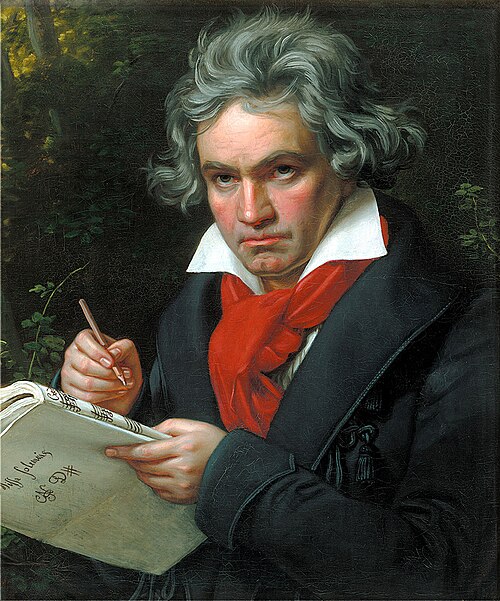 Ludwig van Beethoven
1770–1827
Ludwig van Beethoven
1770–1827
Notable people of the age
- Marie Antoinette (1755–1793) — His singing pupil in Vienna, who as Queen of France brought him to Paris.
- Voltaire (1694–1778) — The Enlightenment writer whose call for clarity and truth mirrored Gluck's reforms.
- George Washington (1732–1799) — First US president — born the very same year as Haydn.
- Captain James Cook (1728–1779) — Explorer charting the Pacific and the east coast of Australia while Haydn wrote symphonies.
- James Watt (1736–1819) — His improved steam engine powered the Industrial Revolution.
- Thomas Jefferson (1743–1826) — Author of the Declaration of Independence — and a keen amateur violinist.
- Catherine the Great (1729–1796) — Empress of Russia during Mozart's whole life.
- Goethe (1749–1832) — Germany's greatest writer — he saw 7-year-old Mozart perform and never forgot it.
- Napoleon Bonaparte (1769–1821) — Hero, then villain, to Beethoven — born just one year before him.
- Jane Austen (1775–1817) — Writing Pride and Prejudice while Beethoven wrote his symphonies.
- Mary Shelley (1797–1851) — Wrote Frankenstein the year Beethoven was sketching his Ninth.