Classical · 1750–1820
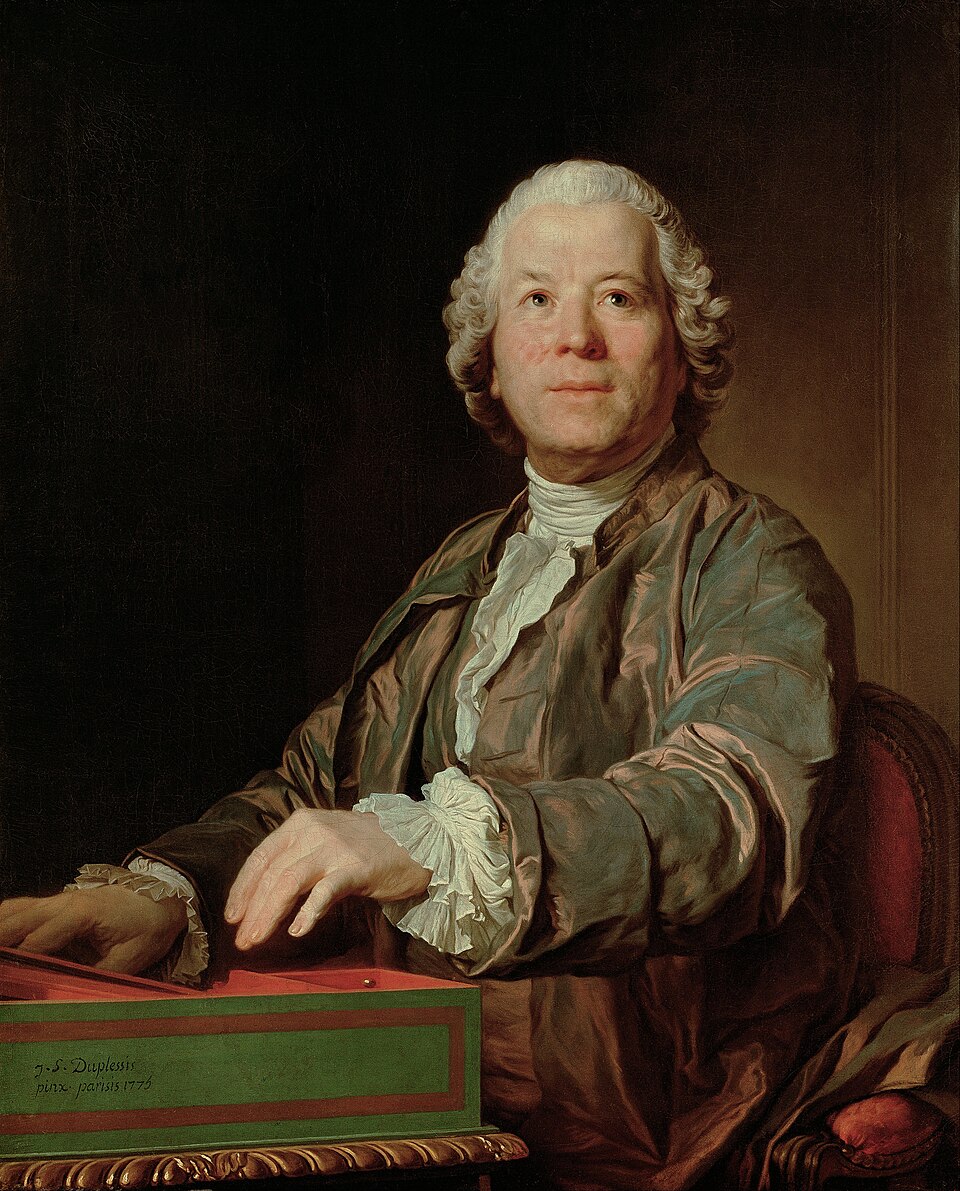
Christoph Willibald Gluck
“The Reformer of Opera”
The composer who rescued opera from showing off — sweeping away vocal fireworks so that the music truly served the drama.
The Classical era (1750–1820): Elegance, balance and clear melodies — the age of the symphony, sonata and string quartet.
Amazing facts
- He led a 'reform' of opera, cutting out the show-off vocal fireworks so the music followed the story and the feelings instead.
- His most famous opera, Orfeo ed Euridice, retells the Orpheus myth — the very same story Monteverdi had set to music 155 years earlier.
- He taught singing to the young Marie Antoinette in Vienna; when she became Queen of France, she invited him to Paris and championed his music.
- His arrival in Paris sparked a famous feud between his fans and those of a rival composer — the newspapers called it the war of the 'Gluckists' and the 'Piccinnists'.
- He was truly international: born in Bavaria, he worked in Milan, London, Vienna and Paris, carrying his new ideas across Europe.
A few pieces to start with
Orfeo ed Euridice
1762
Opera
The first 'reform' opera — the Orpheus myth told with heartfelt simplicity. It contains the serene 'Dance of the Blessed Spirits' for solo flute.
Alceste
1767
Opera
A noble, tragic opera whose printed preface became the famous manifesto of Gluck's reforms — a rulebook for honest musical drama.
Iphigénie en Tauride
1779
Opera
His Paris masterpiece — taut, gripping and dramatic, the finest fruit of everything his reforms set out to achieve.
Life & times — what was happening in the world
1714Born in Erasbach, Bavaria, the son of a forester.
1745Visits London and meets the aging Handel, the most famous composer alive.
1755A devastating earthquake destroys much of Lisbon and shocks Europe.
1756Mozart is born in Salzburg; the Seven Years' War begins.
1762Orfeo ed Euridice, his first 'reform' opera, is performed in Vienna.
1767The preface to his opera Alceste sets out his reform ideas like a manifesto.
1770Gluck's pupil Marie Antoinette marries the future King of France.
1774Conquers Paris with Iphigénie en Aulide; the Gluck–Piccinni rivalry erupts.
1776The American colonies declare their independence.
1783The Montgolfier brothers send the first people aloft by balloon over Paris.
1787Dies in Vienna, the acknowledged reformer of European opera.