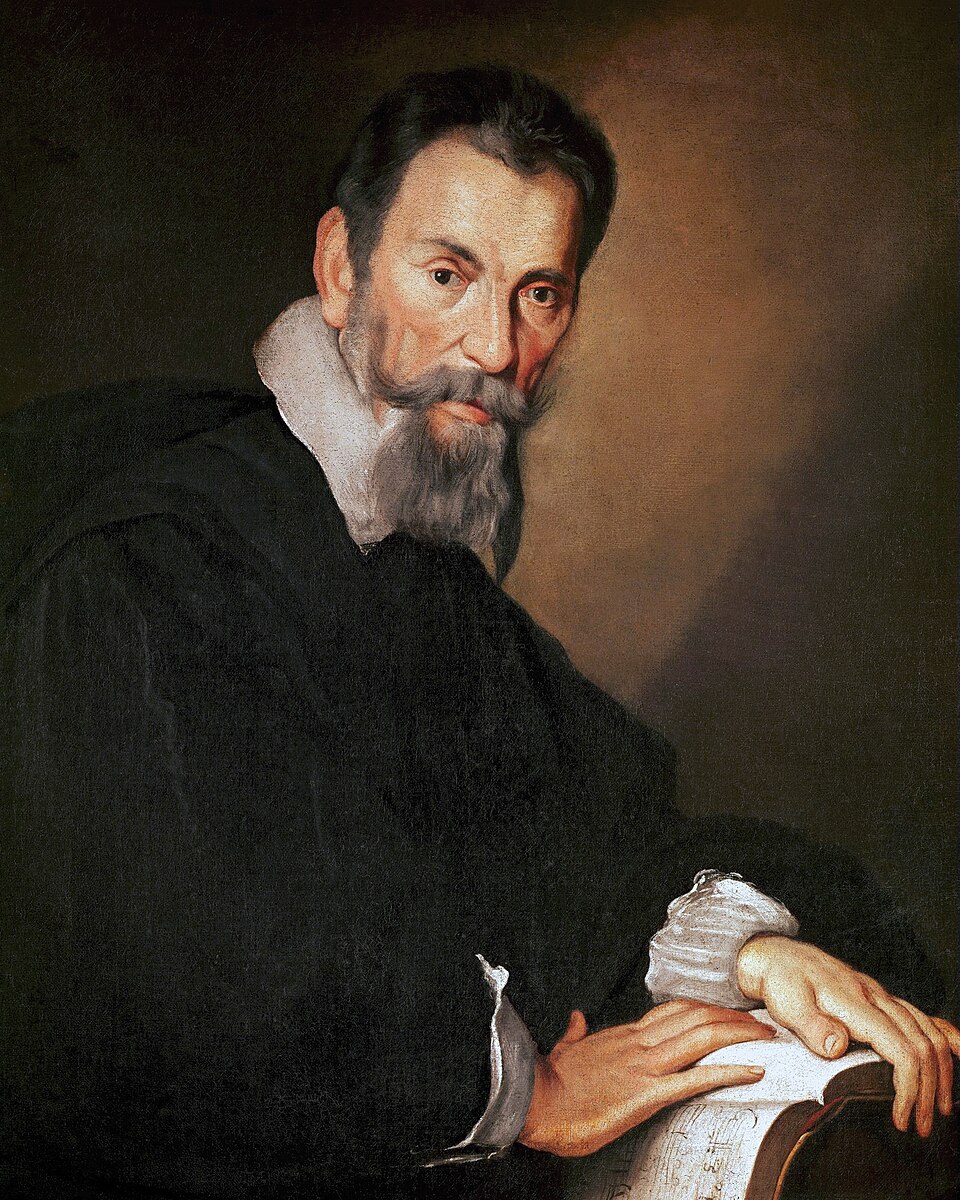
Renaissance · 1400–1600
Claudio Monteverdi
“The Father of Opera”
The daring composer who turned music into storytelling — carrying the old Renaissance world across the threshold into the dramatic new Baroque.
The Renaissance era (1400–1600): Voices weave together like golden threads — the age of grand cathedral choirs, madrigals, and the very first printed music.
Amazing facts
- His opera L'Orfeo, from 1607, is the earliest opera that theatres still stage regularly today.
- He believed music's true job was to move human feelings — his bold 'second practice' let composers bend the old rules to follow the emotion of the words.
- He was born in Cremona, the very town famous for its Stradivarius violins.
- For his last thirty years he ran the music at St Mark's Basilica in Venice — the most prized music job in all Italy.
- He became a priest late in life, yet in his mid-seventies still wrote one of opera's most wickedly human dramas, The Coronation of Poppea.
A few pieces to start with
L'Orfeo
1607
Opera
The first great opera — the tale of Orpheus singing his way into the underworld to win back his love. It opens with a blazing brass fanfare called the Toccata.
Vespers of the Blessed Virgin
1610
Sacred music
A vast evening church service of dazzling variety — echoing choirs, virtuoso singers and instruments, all under one roof.
L'incoronazione di Poppea
1643
Opera
One of his last works, written in his seventies — a gripping, all-too-human drama of love and power in ancient Rome.
Life & times — what was happening in the world
1567Born in Cremona, a northern Italian town of violin-makers.
1590Joins the glittering court of the Gonzaga dukes in Mantua as a singer and viol player.
1600Opera is born in Florence, as poets and composers try to revive Greek drama in song.
1607L'Orfeo, the first great opera, is performed at the Mantuan court.
1607English settlers found Jamestown in America.
1610Publishes his monumental Vespers of the Blessed Virgin.
1610Galileo turns his telescope on Jupiter and discovers its moons.
1613Appointed director of music at St Mark's Basilica in Venice, the top post in Italy.
1618The Thirty Years' War engulfs much of Europe.
1637The world's first public opera house opens in Venice — opera for everyone, not just courts.
1643Dies in Venice, mourned across the city as its greatest musician.