Worksheet
Sight-Reading Self-Test
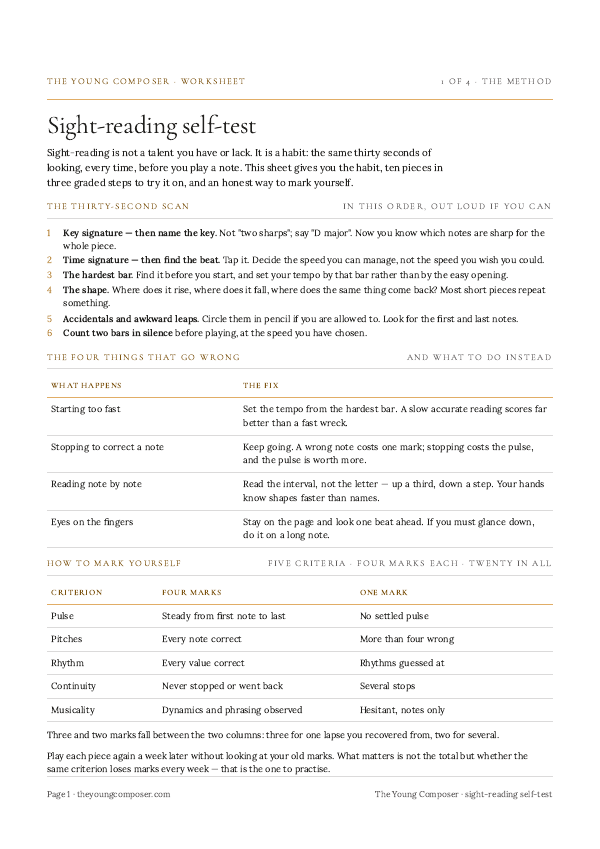
Ten short pieces across three graded steps for practising the sight-reading habit, with a thirty-second scan routine, five marking criteria, and a self-scoring grid for each piece.
What's inside
- The thirty-second scan — six things to check, in order, before playing a note
- The four things that commonly go wrong when sight-reading, and the fix for each
- Five marking criteria — pulse, pitches, rhythm, continuity and musicality — scored out of four each
- Step one — four pieces in simple time and single key signatures, C, G, F major and D minor
- Step two — three harder pieces with dotted rhythms, compound time and a note outside the key
- Step three — three hardest pieces with a raised leading note, semiquavers, and two staves read together