Baroque · 1600–1750
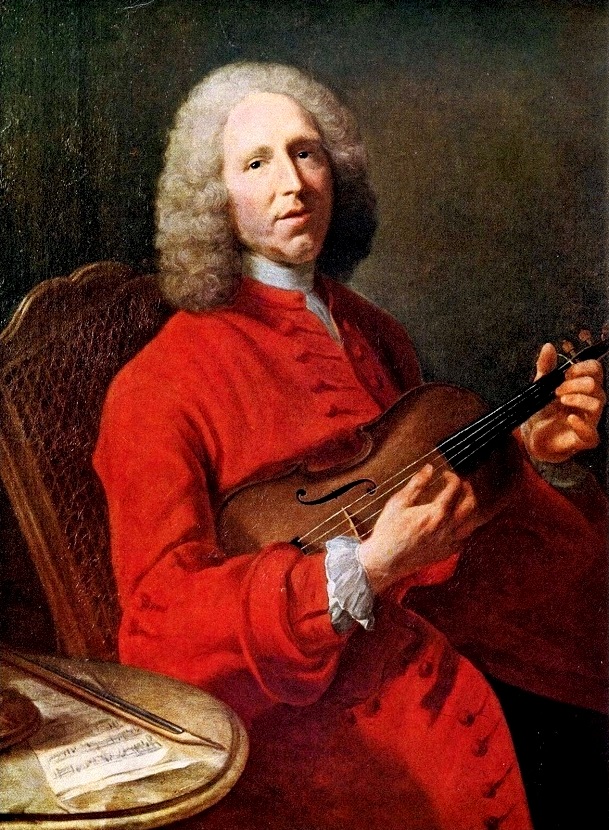
Jean-Philippe Rameau
“The Master of Harmony”
The organist who cracked the science of harmony — writing the rulebook composers still learn from, then conquering Paris with his operas.
The Baroque era (1600–1750): Ornate, dramatic music of courts and churches — fugues, concertos and opera are born.
Amazing facts
- His Treatise on Harmony of 1722 explained WHY chords work the way they do — the foundations of harmony that music students still study today.
- He was almost fifty — an age when most composers slow down — before he wrote his first opera. Then came a run of masterpieces.
- His bold, spicy harmonies split Paris into rival camps of adoring fans and horrified critics.
- The son of an organist, he became a brilliant organist himself, playing in Dijon, Lyon and Paris.
- His harpsichord pieces paint little pictures in sound — a clucking hen, a whirlwind, a conversation between the Muses.
A few pieces to start with
Hippolyte et Aricie
1733
Opera
His startling first opera, written at nearly fifty — its daring harmonies thrilled some Parisians and outraged others.
Les Indes galantes
1735
Opera-ballet
A feast of dances set in far-off lands, bursting with colour, rhythm and some of the most infectious tunes of the age.
La Poule (The Hen)
1728
Harpsichord
A witty harpsichord piece that clucks and pecks — Rameau turns a fussing hen into music you can't help but grin at.
Life & times — what was happening in the world
1683Born in Dijon, the son of a church organist.
1685Bach and Handel are both born, two years after Rameau.
1715Louis XIV dies after a 72-year reign; his great-grandson Louis XV succeeds him.
1722Publishes his ground-breaking Treatise on Harmony and settles in Paris.
1733At nearly fifty, his first opera Hippolyte et Aricie astonishes Paris.
1735Les Indes galantes dazzles audiences with its exotic dances and colour.
1745Appointed court composer to King Louis XV.
1751The famous French Encyclopédie begins publishing, spreading the ideas of the Enlightenment.
1756The Seven Years' War, a truly global conflict, breaks out.
1764Dies in Paris, the most celebrated French composer of his day.