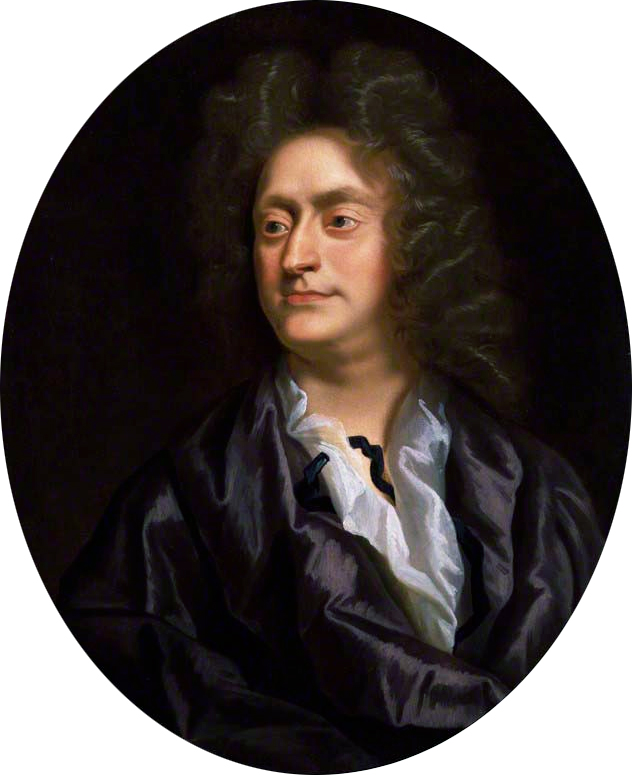
Baroque · 1600–1750
Henry Purcell
“Orpheus Britannicus”
England's greatest Baroque composer, who poured a lifetime of glorious music into just thirty-six years.
The Baroque era (1600–1750): Ornate, dramatic music of courts and churches — fugues, concertos and opera are born.
Amazing facts
- He is often called the finest English composer in the two hundred years between the Renaissance and Edward Elgar.
- His opera Dido and Aeneas ends with 'Dido's Lament', sung over a sad bass line that sinks downwards and repeats, over and over.
- As a boy he sang in the royal choir; when his voice broke at fourteen he turned to composing and tuning the organ instead.
- He wrote music for royal coronations, birthdays and funerals — the music he composed for Queen Mary's funeral was played again months later at his own.
- A tune from his play music for Abdelazer became world-famous 250 years on, when Benjamin Britten built 'The Young Person's Guide to the Orchestra' upon it.
A few pieces to start with
Dido and Aeneas
1689
Opera
A compact, heartbreaking opera. Its closing 'Dido's Lament' — 'When I am laid in earth' — floats over a slowly sinking bass line that repeats like a sigh.
Rondeau from Abdelazer
1695
Theatre music
A bright, striding tune written for a play — later borrowed by Benjamin Britten as the theme for 'The Young Person's Guide to the Orchestra'.
Music for the Funeral of Queen Mary
1695
Sacred music
Solemn drum-and-trumpet processional music of extraordinary dignity — played again, only months later, at Purcell's own funeral.
Life & times — what was happening in the world
1659Born in Westminster, London, into a family of royal musicians.
1660The monarchy is restored in England as Charles II takes the throne.
1666The Great Fire of London burns for four days.
1667Sings as a boy chorister in the Chapel Royal.
1679Becomes organist of Westminster Abbey, still only about twenty.
1687Isaac Newton publishes his Principia, explaining gravity.
1688The 'Glorious Revolution' brings William and Mary to the English throne.
1689Dido and Aeneas, one of the first great English operas, is performed.
1694Writes soaring music for the funeral of Queen Mary II.
1695Dies at just thirty-six and is buried in Westminster Abbey, beneath the organ he played.