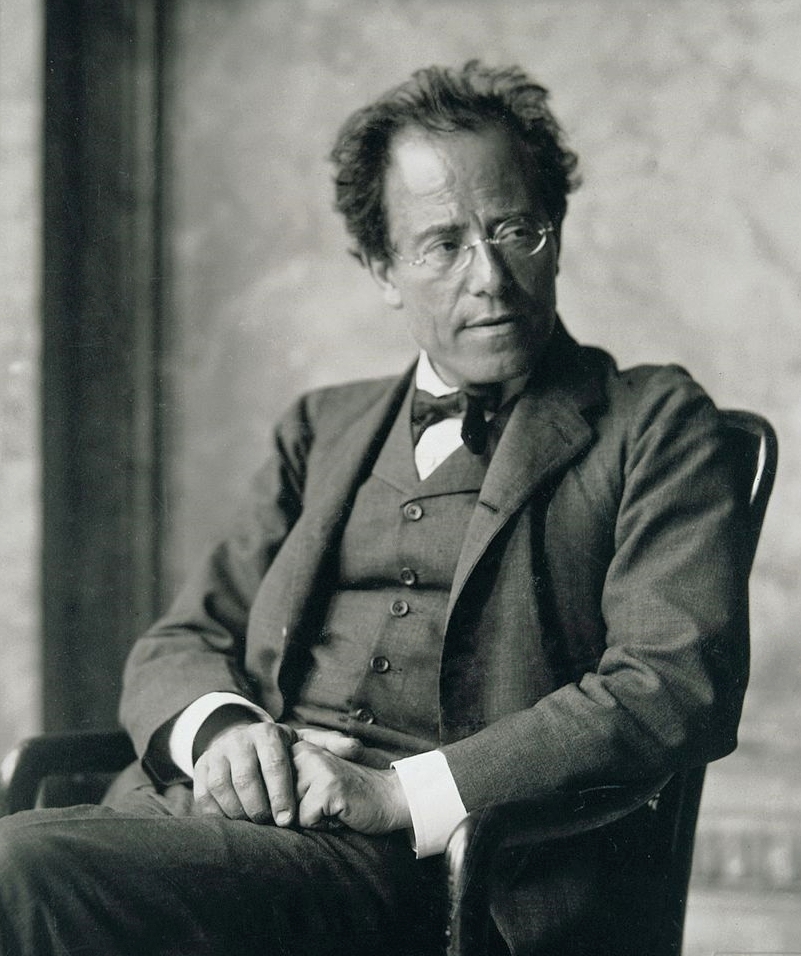
Romantic · 1820–1900
Gustav Mahler
“The Last Great Romantic”
A composer of vast, world-embracing symphonies — famous in his own lifetime as a conductor, and only recognised as a great composer long after his death.
The Romantic era (1820–1900): Big emotions, bigger orchestras — music about love, nature, nations and stormy hearts.
Amazing facts
- He said a symphony should 'be like the world — it must embrace everything', and his symphonies are enormous, often needing a huge orchestra and an hour or more.
- His Eighth Symphony is nicknamed the 'Symphony of a Thousand' for the vast forces of choirs and orchestra it can call upon.
- In his own day he was famous above all as one of the world's greatest conductors, directing the Vienna Court Opera and, later, orchestras in New York.
- He composed in the summer holidays in tiny 'composing huts' in the countryside, escaping his exhausting conducting job.
- He once declared 'My time will come!' — and it did: his music became hugely popular from the 1960s on, decades after he died.
- He wove folk tunes, cowbells, birdsong and marching bands into his giant symphonies, mixing the everyday with the heavenly.
A few pieces to start with
Symphony No. 2 'Resurrection'
1894
Symphony
A vast journey from a funeral march to a blazing choral vision of resurrection — one of the most overwhelming endings in all music.
Symphony No. 5
1902
Symphony
Home to the famous Adagietto — a slow, aching love-song for strings and harp alone, said to be a wordless letter to his wife Alma.
Das Lied von der Erde
1909
Song-symphony
'The Song of the Earth' — a symphony of songs about beauty, loss and farewell, ending as it simply melts into silence.
Life & times — what was happening in the world
1860Born in Kalischt, in Bohemia, then part of the Austrian Empire.
1876Wagner opens his first Bayreuth Festival; the telephone is invented.
1878Graduates from the Vienna Conservatory and begins conducting.
1889The Eiffel Tower opens for the Paris World's Fair.
1897Becomes director of the Vienna Court Opera, the most powerful music post in Europe.
1902Marries Alma Schindler, a gifted musician herself.
1903The Wright brothers make the first powered aeroplane flight.
1905Albert Einstein publishes his theory of relativity.
1907Leaves Vienna for New York and its great orchestras.
1911Dies in Vienna at just 50, his symphonies still little understood.