Romantic · 1820–1900
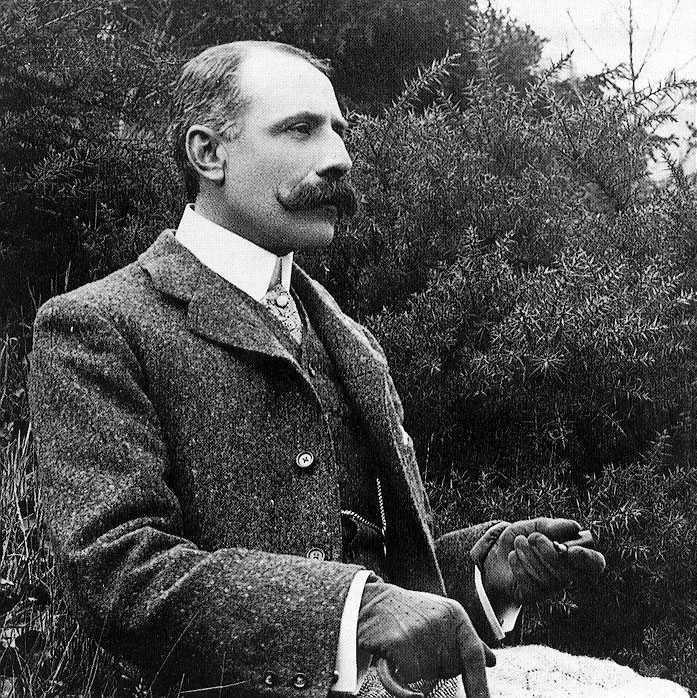
Edward Elgar
“The Voice of England”
The self-taught son of a music-shop owner who became the first great English composer in two centuries — and wrote a tune the whole world knows.
The Romantic era (1820–1900): Big emotions, bigger orchestras — music about love, nature, nations and stormy hearts.
Amazing facts
- He was largely self-taught, learning music from the scores and books in his father's music shop in Worcester.
- His 'Pomp and Circumstance March No. 1' gave the world the tune 'Land of Hope and Glory' — still played at graduation ceremonies across America today.
- His 'Enigma Variations' paint musical portraits of his friends, and hide a secret theme he never revealed — a puzzle still argued over today.
- His Cello Concerto, written just after the First World War, is one of the saddest and most beautiful pieces ever composed — a farewell to a vanished world.
- He loved puzzles and secret codes, kept bulldogs, and cycled the Worcestershire hills hunting for musical ideas.
- He was the first great English composer since Purcell, two hundred years earlier — and was knighted for it.
A few pieces to start with
Enigma Variations
1899
Orchestral
Fourteen musical portraits of Elgar's friends, crowned by the glowing slow variation 'Nimrod' — with a hidden theme he never explained.
Pomp and Circumstance March No. 1
1901
Orchestral march
Its grand central tune became 'Land of Hope and Glory' — heard today at graduations and celebrations around the world.
Cello Concerto in E minor
1919
Concerto
A heartbroken farewell written in the shadow of the First World War — perhaps the most moving music for cello ever composed.
Life & times — what was happening in the world
1857Born in Broadheath, near Worcester, the son of a music seller.
1876The telephone is invented.
1899The Enigma Variations make him famous overnight, at the age of 42.
1901Pomp and Circumstance March No. 1, soon known as 'Land of Hope and Glory', is first heard.
1901Queen Victoria dies, and the Edwardian age begins.
1904Knighted by King Edward VII.
1914The First World War breaks out across Europe.
1919Writes his elegiac Cello Concerto, his last great masterpiece.
1922The BBC begins broadcasting to Britain.
1934Dies in Worcester, mourned as England's greatest composer.